
Read the Idaho County Property Value Fields
The Idaho County Parcel Viewer shows several assessment fields together in one parcel popup. The total sits beside separate land and improvement amounts. Exemption and net fields show how the taxable figure was adjusted. Those numbers belong to an assessment record. A deed date and reference can lead to the recorded instrument. But the public parcel layer shows no sale-price field.
| Record figure | What it answers | Best source |
|---|---|---|
| Total, land, improvements | How the assessment is allocated between the site and structures | Idaho County GIS/Assessor parcel record |
| Exemption and net | Whether an adjustment is represented and the resulting taxable amount | Assessor roll; confirm the applicable year |
| Market-value conclusion | Idaho assessments use the 100% market-value concept, subject to the statutory process and date | Assessor and annual notice |
| Transfer consideration | Evidence connected with an actual conveyance, not a GIS value field | Recorded deed and supporting sale evidence |
Idaho law points assessors toward full market value. Assessment and price are still different concepts. The assessment is a mass-appraisal conclusion as of a valuation date, while price reflects the terms of one particular transfer. Compare like dates and record types before calling one number higher or lower than another.
What the County Parcel Layer Actually Exposes
The queryable Idaho County parcel service documents the attributes behind each map result. Value fields are only the start. The same record carries the APN or PID, owner display, property and mailing addresses, legal-description lines, tax area, acreage, and deed date and reference. Copy the update date too. Context is what keeps a figure from floating free of its record.
The Idaho County Assessor page names the assessment office.
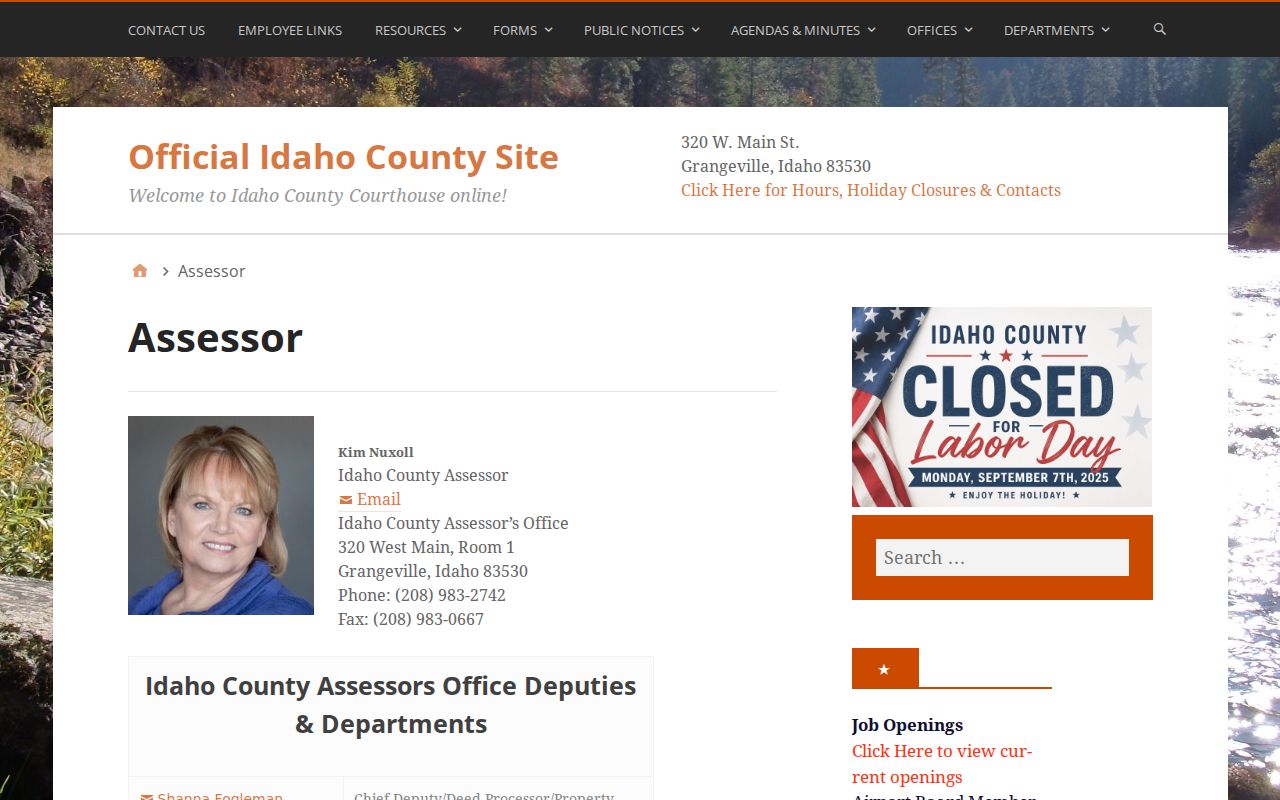
The office page is the confirmation route when a parcel popup, exemption field, or assessment year needs an authoritative explanation.
Land and Improvement Figures Need Context
Parcel-layer output shows why each component should be copied. One rural parcel carried a total and land value of $67,313, an improvement value of zero, an exemption of zero, and a net of $67,313. A Cottonwood parcel split a total of $84,942 into $21,039 land and $63,903 improvements. Those are examples, not estimates. Do not apply them to neighboring property.
Preserve the whole record. Capture the parcel ID, valuation components, tax area, assessment year or update date, and legal description together. A bare total cannot show whether a change came from land, improvements, an exemption, or a later data refresh.
Idaho County's Assessment Calendar Changes the Question
Assessment work ties to January 1. The exemption deadline is April 15. The fourth Monday in June opens the window to contest an assessment. Payment dates fall on December 20 and June 20. Those dates describe different workflows. A value challenge goes through the Assessor and Board of Equalization, while a payment issue belongs with the Treasurer.
Use the notice year and roll type when asking why an Idaho County property value changed. Old saved pages go stale. If the June protest window is near, confirm the current deadline directly, and see the property tax records guide for bills, installments, and delinquency.
Look Up an Idaho County Property Value
Use the map for discovery. The Assessor is the custodian, and searching by more than one identifier helps most on rural parcels with no populated situs address.
- Open the Idaho County Parcel Viewer and try the site address, owner name, or parcel number.
- Confirm the legal description and APN/PID before copying total, land, improvement, exemption, and net fields.
- Record the visible update date, tax area, and any deed date/reference. Treat zero or blank deed values as questions, not proof of no transfer.
- Ask the Assessor to confirm the relevant assessment year and explain any field that does not match the notice.
- For sale evidence, request the identified instrument from the Clerk/Recorder and keep it separate from the assessment.
- Assessment
- The county's value conclusion for the tax roll and applicable valuation date.
- Net value
- The resulting record field after represented exemptions or adjustments; confirm its meaning for the roll year.
- Sale evidence
- A transaction-specific source that can differ from the assessment because timing and terms differ.
Tax Area Does Not Redefine Property Value
The parcel layer includes a tax-area field. That code identifies the districts used in a bill calculation. It is not a second estimate of the land or buildings. Two properties with similar assessed figures can owe different amounts. District rates, exemptions, or other bill components can differ. Compare values to values and bills to bills. The Treasurer's property-tax guidance explains payment timing and tax administration.
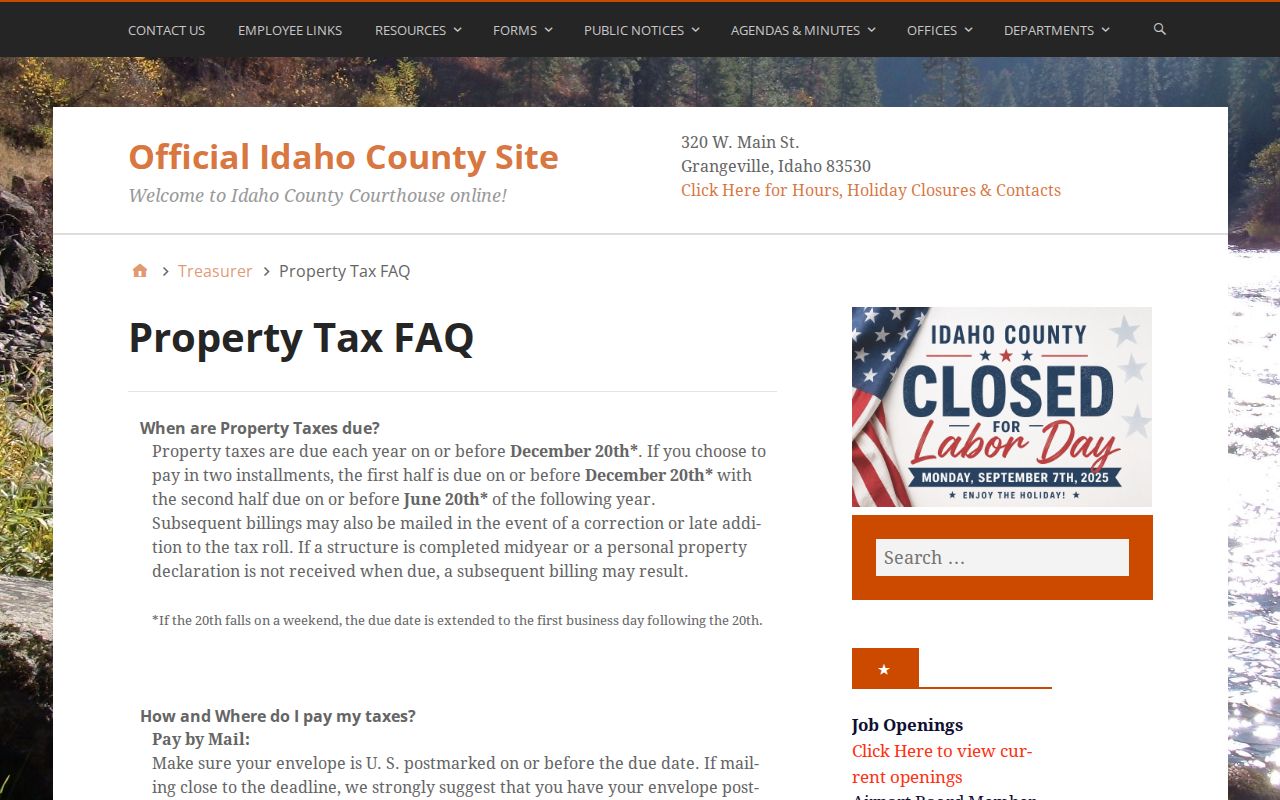
Use the Treasurer source after identifying the assessment record. A tax balance there is no substitute for an appraisal conclusion about value.
Why Sale Price Is Missing from the Public Parcel Layer
The parcel service publishes no visible sale-price field. A deed date and reference can lead to the recorded instrument, but neither proves the consideration amount by itself. Contact the Idaho County Clerk/Recorder with the parties, legal description, approximate date, and any deed reference. The county publishes no countywide public deed-image index online.
This limitation has an upside. It stops a parcel-layer total from being mislabeled as the last sale price. Where a price is material, cite the instrument or another transaction source. Keep the matching date, parties, and description.
A Zero Deed Date Is a Question, Not an Answer
A zero deed date raises a question, not a verdict. Consider a parcel at 409 Main Street. The GIS record showed the owner, legal description, and assessment components in full. Yet the deed-date field read zero. That zero proved nothing about whether a deed existed. A populated GIS value can sit beside an incomplete transfer clue, so ask the Recorder for the latest deed and compare the reply with the parcel update date.
Improvement value demands the same discipline. Zero can be correct for vacant or unimproved land. It cannot declare that no structure exists. Check the parcel, the assessment record, and city or county permit evidence first.
Mailing and situs fields deserve separate treatment too. One rural parcel carried no property address at all. Its owner's mailing address sat in Boise. An address-only search would miss a mapped and assessed parcel. Switch to APN/PID, owner, PLSS, or legal-description clues, and tell the Assessor which field failed. Never substitute the mailing address for the property location.
Values that differ across saved records need a date check before you assume an error. A parcel-layer update date, annual assessment date, notice date, exemption filing, and later transfer can sit on separate timelines. Keep copies of the records you compare and ask the custodian whether one entry is preliminary, corrected, or final on the roll.
Know What an Idaho County Assessor Value Cannot Prove
An Idaho County assessor value proves less than people hope. It cannot establish a future sale price. It cannot settle a boundary, title, or structural condition. Nor can it prove the legal effect of an exemption. The figure exists for the assessment system. It is not a property-specific opinion commissioned for a transaction. Each question has its own record. A recorded deed answers the transfer question. A survey addresses boundary precision. A licensed appraisal handles a defined market-value assignment.
To review or contest a value, gather the notice, parcel characteristics, land and improvement components, and exemption status. Include photos or factual corrections, plus any comparable evidence the office accepts. Identify the January 1 valuation date. Confirm the correct roll before presenting a later renovation or sale. Ask a specific question: which characteristic, component, exemption, or date produced the disputed Idaho County property value?
Value is not price. An Idaho County property value on the roll may be useful evidence, but it is not a promise of what the property will sell for. For a transaction-specific conclusion, obtain a qualified appraisal and review current market evidence.